Invisalign Clear Aligners Orthodontic Treatment – Discreet, Comfortable & Effective Solution
What is Orthodontic Treatment (Braces)?
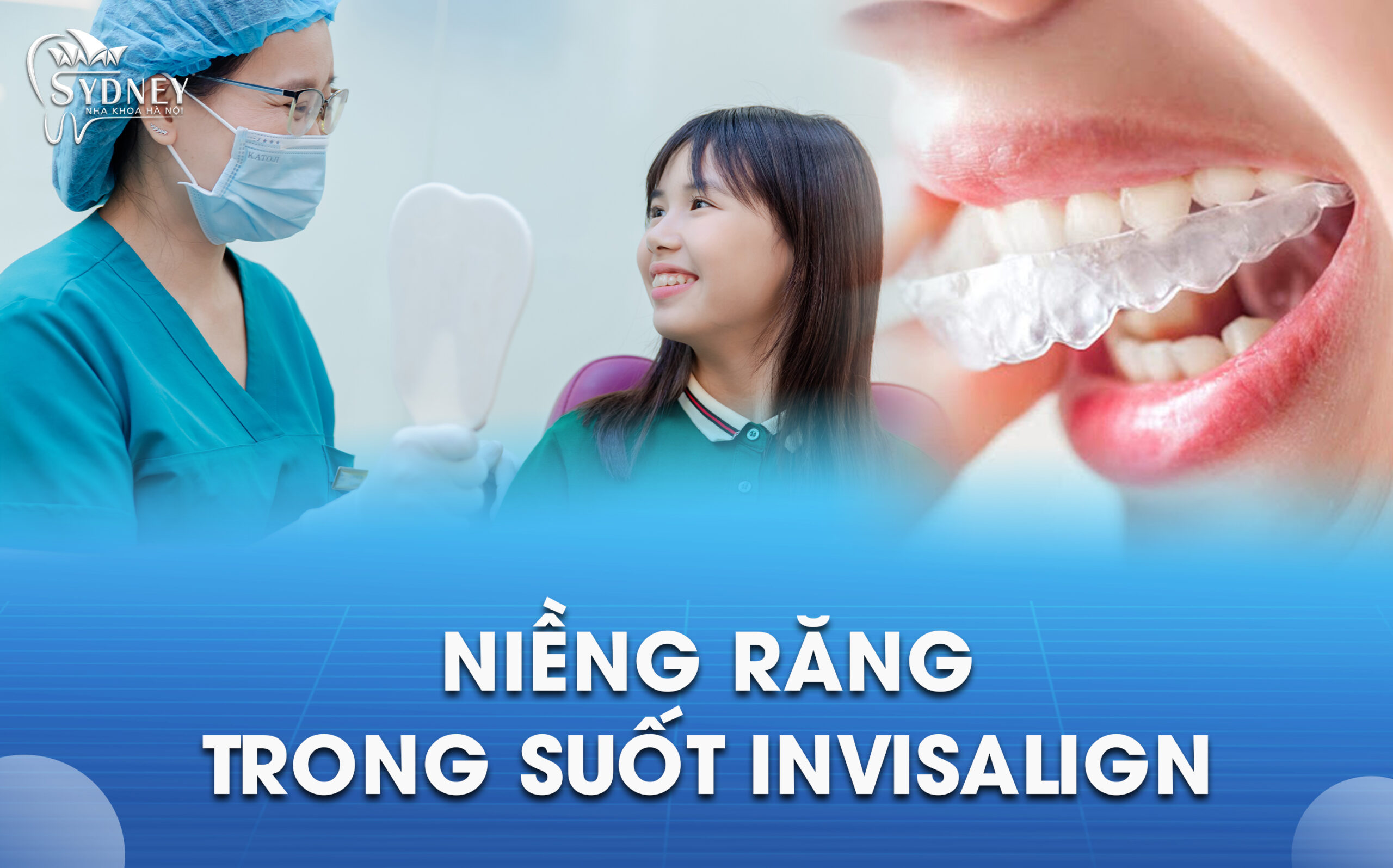
Orthodontic treatment is a dental method that helps align teeth properly and restore an optimal bite, giving you a perfect smile and better oral health. Today, braces are commonly used to treat cases such as underbite, overbite (protruding teeth), crooked or crowded teeth, extra teeth, misaligned teeth, crossbite, and other bite issues.
In addition to improving aesthetics, orthodontic treatment also helps correct the bite in the most effective way. Below is the Invisalign clear aligner method from the United States, considered one of the most advanced orthodontic solutions available today.
————————-
Benefits of Invisalign Clear Aligners
-
Teeth look natural during the treatment process
-
No strict dietary restrictions
-
Comfortable, without inconvenience in daily activities
-
Ensures good oral health
-
Regular check-ups to ensure teeth move in the right direction
-
Aligners are easily changed every 2 weeks
-
Patients can visualize the entire treatment process through a 3D simulation
Invisalign Treatment Process
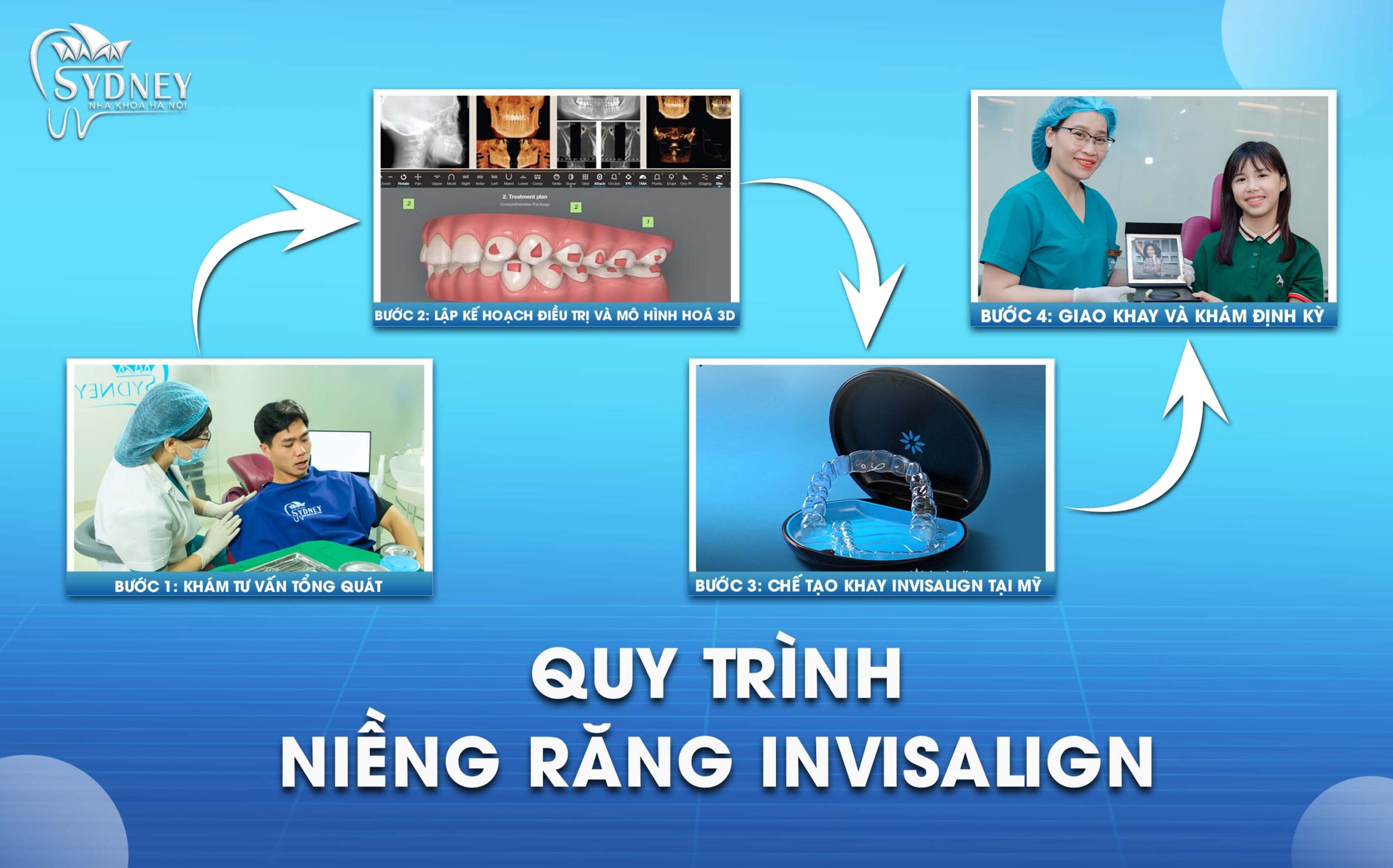
Step 1: General examination and data collection
Step 2: Treatment planning and 3D simulation
Step 3: The dentist works with the patient and a lab in the USA to fabricate Invisalign aligners
Step 4: Delivery of aligners and periodic check-ups every 2–6 weeks depending on each patient
Xem thêm:TẠI SAO NIỀNG RĂNG TRONG SUỐT LẠI ĐƯỢC NHIỀU NGƯỜI ƯA CHUỘNG ĐẾN VẬY?
——————————————————-
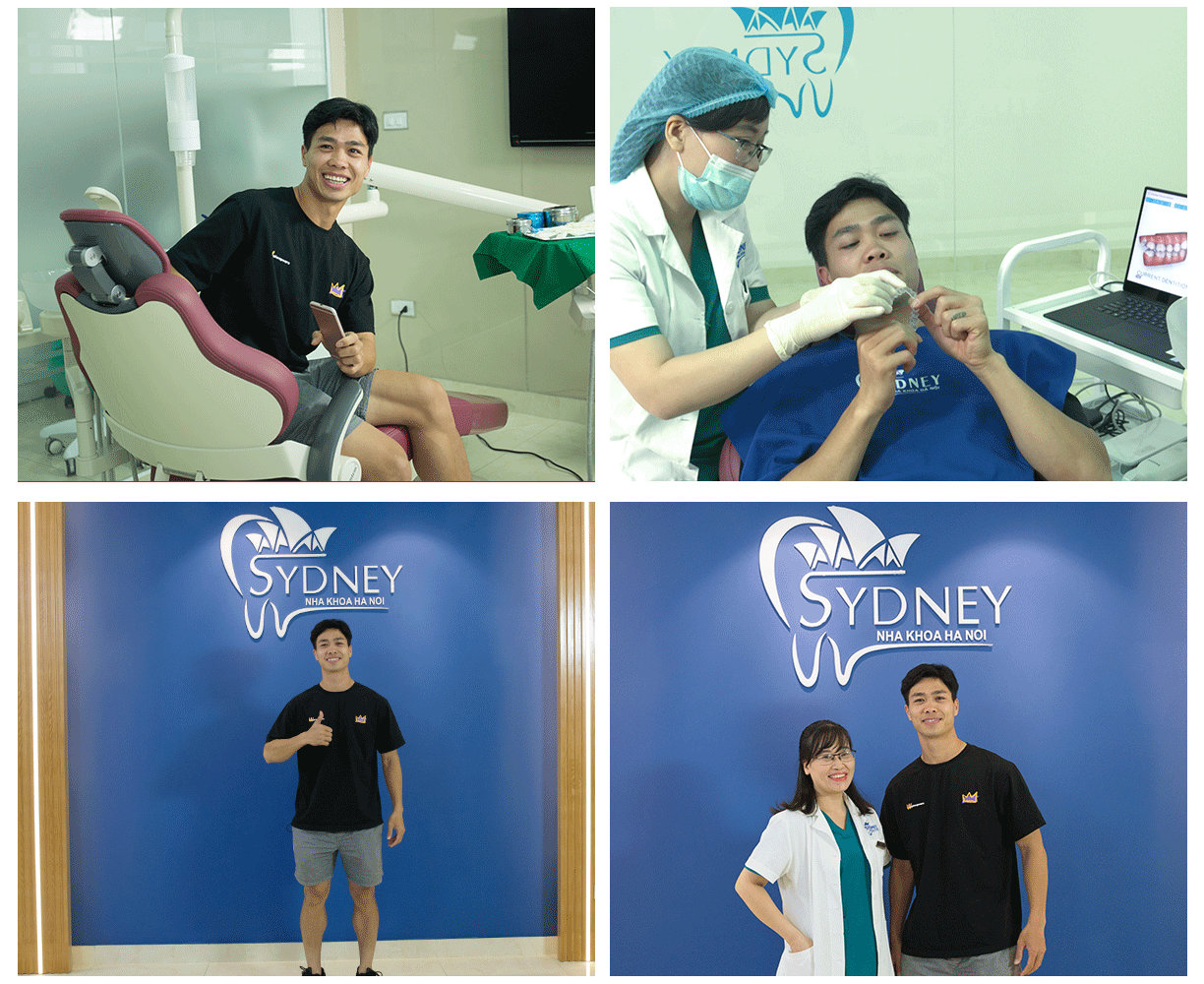
INVISALIGN CLEAR ALIGNERS FROM THE USA WITH FOOTBALL STAR Nguyễn Công Phượng AT HANOI SYDNEY DENTAL CLINIC
Invisalign Effectively Solves Dental Problems
Invisalign effectively corrects common dental issues such as crowding, misalignment, protruding teeth (overbite), underbite, and bite irregularities. Specifically:
1. Class I Malocclusion (Protrusion / Overbite)
The facial profile (forehead – nose – chin) appears slightly imbalanced, with the upper jaw protruding forward, lips protruding, and the chin slightly retruded. The inner teeth may align relatively well, but the upper front teeth significantly overlap and cover most of the lower front teeth.
2. Class II Malocclusion (Underbite / Reverse Bite)
The alignment of the forehead – nose – chin is disrupted, often creating a concave facial profile. From the side view, the nose may appear slightly bent, and the chin protrudes forward. The lower front teeth overlap the upper front teeth. The facial midline may be straight or broken but is often deviated to one side. Patients with this condition may experience difficulty chewing, a higher risk of impacted canines, and possible speech issues.
3. Class III Malocclusion (Edge-to-Edge Bite)
The forehead – nose – chin alignment appears normal. The molars may or may not contact properly, while the upper and lower front teeth meet edge-to-edge.
4. Open Bite
A noticeable gap exists between the upper and lower front teeth when biting. The back teeth function normally, and facial proportions remain balanced. However, chewing efficiency is reduced and aesthetics are affected.
5. Deep Bite
The upper front teeth excessively overlap the lower front teeth, sometimes causing the lower teeth to contact the gum tissue behind the upper teeth. The posterior teeth may still function normally.
6. Crossbite
The facial midline (forehead – nose – chin) may appear misaligned. Teeth are displaced either inward or outward compared to normal alignment, and the upper and lower arches do not match properly.