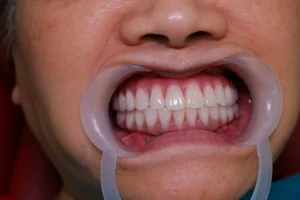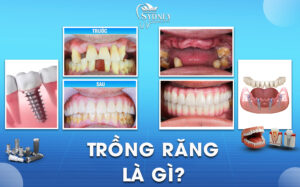
All-on-4 replaces an entire arch of missing or failing teeth with just four titanium implants and one fixed bridge, a stable alternative to removable dentures.
At Hanoi Sydney Dental Clinic, treatment typically costs around $5,000–$10,000 USD per arch, depending on implant brand and prosthesis material, compared with $20,000–$40,000 in the United States. Beyond the savings, you can compare implant brands, surgeon experience, prosthesis options and aftercare before you travel.
[Get a Free All-on-4 Quote]
What Is All-on-4?
All-on-4 dental implants are a full-arch restoration technique that replaces most or all of the teeth in one jaw with a fixed prosthesis supported by just four implants. Two implants are placed vertically in the front of the jaw, and two are placed at the back at an angle of about 30 to 45 degrees. The angled rear implants make better use of the available bone, so in suitable patients extensive bone grafting can often be avoided.
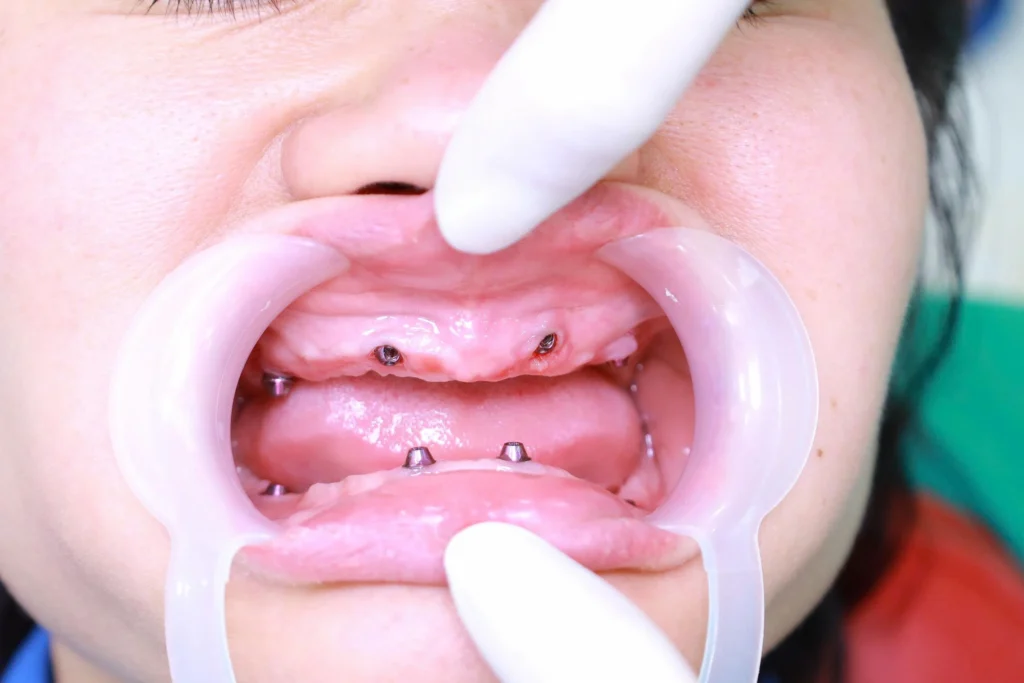
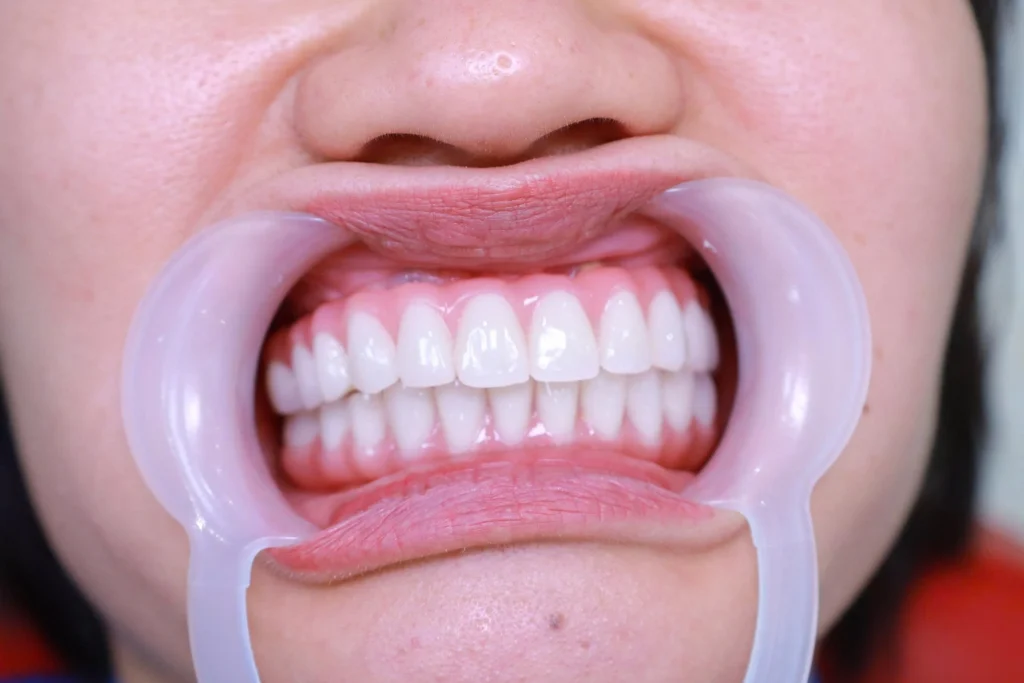
A fixed bridge is then attached to the four implants. Depending on the treatment plan, patients may receive a provisional bridge shortly after implant placement, followed by a final prosthesis once healing and osseointegration are complete.
The technique is closely associated with Dr. Paulo Maló, whose treatment protocol helped establish the modern full-arch approach.
All-on-4 is not simply a cheaper alternative to placing an implant for each missing tooth. It is a complete treatment strategy that covers implant positioning, bite design, prosthetic planning, healing, and long-term maintenance.
Why Facial Appearance Changes When You Lose Teeth — and How All-on-4 Restores It
Tooth loss affects more than chewing. When teeth are missing for a long time, the jawbone gradually resorbs because it no longer receives the stimulation that tooth roots provide.
As bone volume decreases, the lower face may look shorter, and the lips and cheeks can lose some of their natural support. Patients with extensive tooth loss often notice changes around the mouth, such as deeper facial folds or a more sunken appearance.
A properly planned full-arch restoration can help restore tooth position, bite height, and support for the lips and surrounding facial tissues. The aesthetic result depends on several factors, including implant position, prosthetic design, tooth shape and colour, gum appearance, and the patient’s individual facial proportions.
All-on-4 should therefore be seen as both a functional and a restorative treatment. The goal is not simply to replace missing teeth, but to create a stable bite and a natural-looking smile that suits the patient’s facial structure.
→ View more: Dental Bridges
How Much Does All-on-4 Cost in Vietnam?
All-on-4 dental implants in Vietnam generally cost around $5,000–$10,000 USD per arch in 2026, depending on the implant system, prosthesis material and complexity of treatment. Some clinics advertise entry-level packages around $4,500–$5,000, while premium full-arch treatment using systems such as Nobel Biocare or Straumann can approach or exceed $8,000–$10,000 per arch.
At Hanoi Sydney Dental Clinic, the final price will depend on the patient’s dental condition and the treatment plan selected. The figures below are useful as a general reference when comparing All-on-4 treatment in Vietnam with prices in other countries.
Typical All-on-4 Pricing by Implant Brand
| Implant Brand / Tier | Origin | Approximate All-on-4 Price per Arch | Typical Positioning |
| Dentium | South Korea | $3,500–$6,600 / Warranty: 10 years | Value to mid-range |
| Dentium | USA | $4,100–$7,000 / Warranty: 15 years | Mid-range |
| Neodent | Brazil / Switzerland | $5,100–$8,200 / Warranty: Lifetime | Premium |
| Mis C1 | Europe | $5,500–$8,000 / Warranty: 20 years | Mid-to-premium |
| Straumann | Switzerland | $7,200–$10,000 / Warranty: Lifetime | Premium |
These ranges are indicative market figures rather than a fixed Hanoi Sydney Dental Clinic price list. Published 2026 Vietnam treatment guides show similar broad differences between Korean implant systems and premium Nobel Biocare or Straumann systems.
Typical All-on-4 Cost Comparison by Country
| Country | Typical All-on-4 Cost per Arch |
| United States | $20,000–$40,000 USD |
| Australia | $20,000–$35,000 AUD |
| United Kingdom | £15,000–£28,000 |
| Canada | $25,000–$40,000 CAD |
| New Zealand | $32,000–$50,000 NZD |
| Vietnam | Approximately $3,500–$10,000 USD |
The actual price can vary considerably between providers. Patients should compare the entire treatment package rather than comparing the implant fixture price alone.
What Does the All-on-4 Price Usually Include?
A transparent quotation should clearly separate what is included from what may be charged separately.
A typical full-arch package may include:
- Four dental implants
- Implant surgery
- A provisional fixed bridge
- The final fixed bridge
- Implant components and abutments
- Diagnostic imaging or treatment planning
- Follow-up appointments
Potential additional costs may include:
- Tooth extractions
- Bone grafting
- Sinus lift procedures
- Treatment for active gum disease
- Additional surgical procedures
- Upgrades to premium prosthetic materials
Some Vietnamese clinics publish all-inclusive All-on-4 packages, while others itemise CBCT, extractions, grafting or prosthetic upgrades separately.
The most useful question is therefore not simply, “How much is All-on-4 in Vietnam?” but “What exactly is included in my quoted All-on-4 treatment?”
→ For a complete overview of our current implant and full-arch packages, please see our price list.
Who Is a Good Candidate for All-on-4?
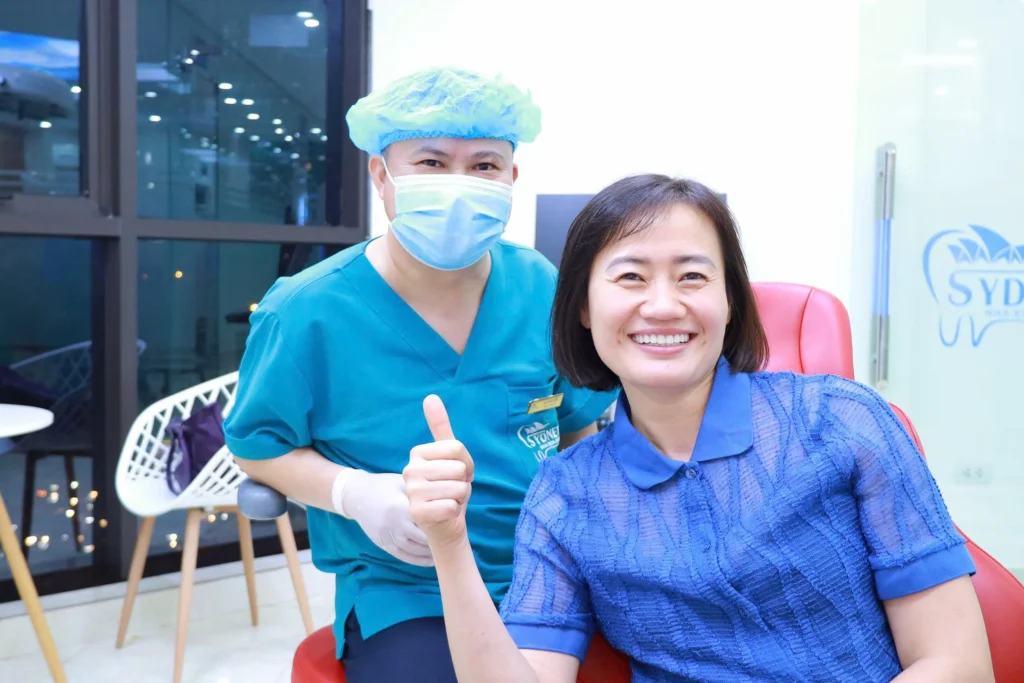
All-on-4 is generally considered for patients who need full-arch tooth replacement rather than patients who are missing only one or two teeth.
You’re likely to be a good candidate if:
- You are missing all or most teeth in one or both arches.
- You have loose, failing or severely damaged teeth across a full arch.
- You wear dentures that move, feel uncomfortable or do not provide sufficient chewing stability.
- You have some bone loss in the posterior jaw but adequate bone in areas where implants can be placed.
- You are in reasonably good general health.
- Diabetes, when present, is medically controlled.
- You do not smoke, or you are willing to stop smoking around the treatment period.
All-on-4 may not be right for you if:
- You are missing only one or two teeth and a single implant or smaller restoration would address the problem.
- You have severe bone loss in the anterior jaw and additional bone reconstruction may be required.
- You have uncontrolled diabetes.
- You have untreated periodontal or gum disease.
- You are a heavy smoker and are unwilling or unable to reduce or stop smoking.
- Your medical history creates additional surgical considerations that need to be addressed first.
The final decision cannot be made from an online checklist alone. A clinical examination and CBCT scan are typically required to assess bone volume, implant positioning, the condition of remaining teeth, bite relationships and other anatomical factors.
A patient who appears suitable for All-on-4 from a dental photograph may still require a different treatment plan after three-dimensional imaging.
→ View more: Dental Implants
The All-on-4 Procedure, Step by Step
Treatment with All-on-4 dental implants in Vietnam usually happens in several stages rather than in a single appointment. The overall timeline depends on bone quality, healing, prosthetic requirements, oral health, and the patient’s individual treatment plan.
Step 1 — Consultation, CBCT Scan & Digital Treatment Plan
The process begins with a consultation and dental examination.
A CBCT scan gives three-dimensional information about the jaws and is especially important when planning dental implants. It helps the dental team evaluate the available bone, nearby anatomical structures, and possible implant positions.
The treatment plan may also take into account the patient’s facial appearance, bite, tooth position, and prosthesis design before surgery takes place.
International patients can send recent dental records or X-rays before travelling to help the clinic understand their initial situation, although an in-person examination and updated imaging may still be needed.
Step 2 — Surgery Day & Same-Day Provisional Bridge
On surgery day, the implants are placed according to the treatment plan.
Full-arch implant surgery can take several hours, depending on the patient’s condition and whether extractions or other procedures are required. Many clinics quote about 2–4 hours per arch for straightforward cases.
In suitable cases, the patient may receive a provisional fixed bridge at the time of implant placement, commonly known as same-day teeth. This bridge is not necessarily the permanent restoration. It gives the patient fixed teeth while the implants undergo osseointegration.
Step 3 — Osseointegration and Healing
Osseointegration is the process by which the implants bond with the surrounding jawbone.
Healing commonly takes about 3–6 months, although individual timelines vary. During this time, patients usually keep wearing the provisional bridge and gradually return to a broader diet, following the dental team’s instructions.
Smoking can interfere with healing and is an important risk factor to discuss before surgery. Patients with diabetes should make sure the condition is medically controlled.
Regular follow-up appointments let the dental team monitor healing and catch any complications early.
Step 4 — Final Fixed Bridge Fitting
Once healing is sufficient, the provisional bridge is replaced with the final fixed prosthesis. Depending on the treatment plan, the final restoration may be made from materials such as zirconia or acrylic with titanium reinforcement.
Digital impressions or other records may be used to finalise the prosthesis. Before completion, the final teeth are checked for fit, appearance, bite, and function.
International patients should also receive full treatment documentation, including details of the implant system and restoration, so their records remain available after they return home.
Real Patient Cases — Before & After
Real patient cases are one of the most useful ways to evaluate an All-on-4 provider.
Hanoi Sydney Dental Clinic should publish before-and-after cases only with appropriate patient consent and adequate clinical documentation.
Each case should explain:
- Patient’s initial condition
- Upper or lower arch treated
- Number of implants placed
- Implant brand
- Prosthesis material
- Number of visits
- Approximate treatment timeline
- Relevant clinical considerations
- Date or treatment period
The photographs should show the actual patient journey rather than stock photography.
If publishable All-on-4 cases are available, the gallery can help international patients understand what full-arch restoration may look like.
Individual results vary, and before-and-after photographs should not be interpreted as a guarantee of the same outcome for another patient.
All-on-4 vs. All-on-6 vs. Implant-Supported Dentures
All-on-4 is not automatically the right solution for every patient. An alternative such as All-on-6 or an implant-supported overdenture may be considered depending on bone volume, bite forces, anatomy, budget and the desired type of restoration.
| Criterion | All-on-4 | All-on-6 | Implant-Supported Denture |
| Implants per arch | 4 | 6 | Usually 2–4 |
| Bone requirement | Less | More | Least |
| Restoration | Fixed | Fixed | Removable |
| Relative cost | Lower than All-on-6 | Higher | Lowest |
| Typical use | Full-arch fixed restoration with limited posterior bone | Patients with greater available bone and higher functional demands | Patients wanting improved stability while retaining a removable denture |
The main difference is not simply the number of implants.
All-on-4 uses four strategically positioned implants to support a complete fixed arch. All-on-6 distributes the restoration across six implants and may be considered when additional implant support is appropriate.
An implant-supported denture, sometimes called an overdenture, remains removable but uses implants to improve retention and stability compared with a conventional loose denture.
The right choice depends on your bone volume, anatomy, bite force, oral health and restorative goals. CBCT imaging and clinical examination are needed to determine which option is appropriate.
→ View more: All-on-6 Dental Implants in Vietnam
Is All-on-4 Safe? Success Rates & Possible Risks
All-on-4 is an established full-arch implant approach, but no surgical procedure is completely free of risk. Published long-term clinical studies commonly report 10-year implant survival of approximately 94-98%, although results vary depending on the study, patient population, implant system, follow-up period, and clinical circumstances. These figures are not a guarantee of any individual patient’s outcome.
Possible All-on-4 complications include:
- Implant integration failure: an implant may not integrate successfully with the surrounding bone.
- Peri-implantitis: inadequate oral hygiene can lead to inflammation and bone loss around the implants.
- Mechanical complications: the fixed bridge can wear, become damaged, or fracture, depending on the material, bite forces, and other patient-specific factors.
- Smoking: it can negatively affect implant outcomes and should be discussed openly with the dental team.
- Diabetes: it may affect healing, particularly when blood glucose is poorly controlled.
How Can Treatment Risk Be Reduced?
Risk reduction starts with careful patient selection and detailed treatment planning. CBCT imaging helps the dental team understand jaw anatomy before the implants are placed. Implant brand traceability and accurate treatment records are also important for long-term maintenance.
Patients should also receive clear instructions on cleaning, diet, medication, and follow-up.
Meet Your Implant Specialist
Dr. Ha Ngoc Chieu, DDS, PhD
Dr. Ha Ngoc Chieu, DDS, PhD, has more than 22 years of experience in dentistry and maxillofacial practice.
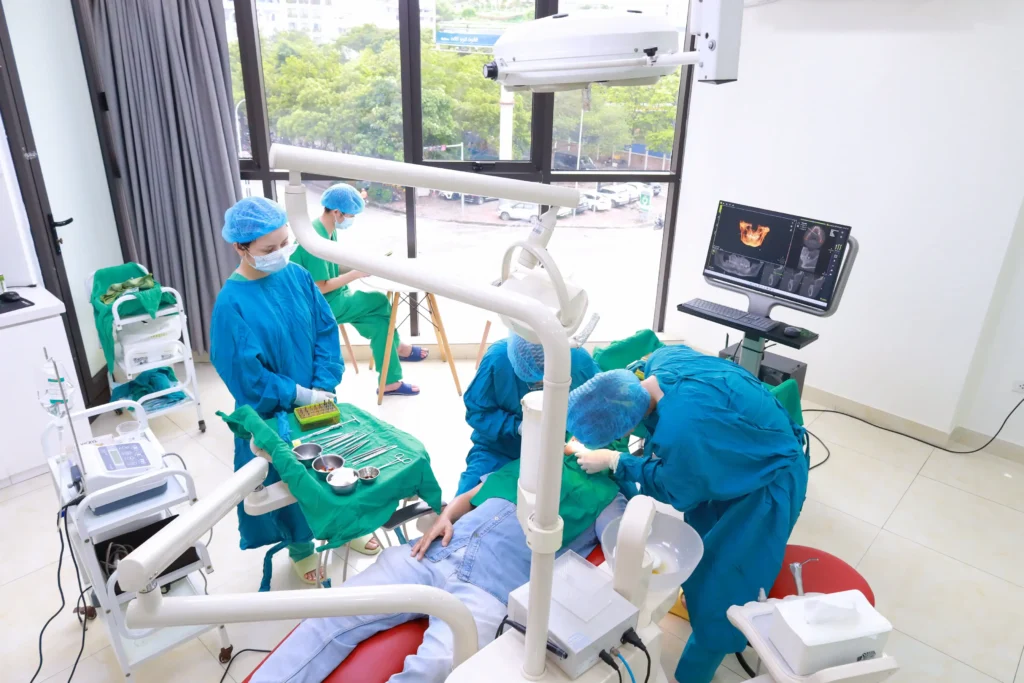
His professional areas include dental implants, oral surgery, cosmetic dentistry and preventive dentistry, with advanced training associated with the United States, France and South Korea.
For an international patient considering full-arch rehabilitation, understanding who is responsible for treatment planning and surgery is an important part of evaluating a clinic.
A doctor profile should clearly explain the clinician’s qualifications, areas of expertise and role in the patient’s treatment. Patients can also ask who will personally perform implant surgery and prosthetic treatment during their consultation.
→ Learn more about our team and clinic on the About Us page.
Aftercare: Living With Your All-on-4 Bridge
Fixed teeth do not mean daily maintenance is no longer necessary. The implants and surrounding tissues still need long-term care.
Daily hygiene may include:
- A soft toothbrush
- Interdental brushes
- A water flosser, where appropriate
- Careful cleaning beneath and around the fixed bridge
- Regular professional cleaning
Many implant patients are advised to attend professional maintenance appointments about every six months, although the exact schedule should be set by the treating dental team. An annual dental and radiographic review may also be appropriate to monitor the implants and surrounding bone.
During the early healing period, patients may need to follow a softer diet and gradually increase chewing load according to clinical instructions. Smoking cessation is especially important for long-term implant health.
How Long Do All-on-4 Implants and Bridges Last?
Implants and prosthetic teeth do not have the same lifespan. With appropriate maintenance, dental implants can remain functional for many years, and implant longevity of 20 years or more is possible in some patients.
The fixed bridge may need maintenance or replacement sooner, depending on the material, chewing forces, oral hygiene, and other factors. A practical service-life range for the prosthetic restoration is often discussed as 12–20 years, although individual results vary.
The long-term success of All-on-4 therefore depends not only on the original surgery, but also on maintenance and regular professional review.
What Happens After You Fly Home?
After completing treatment in Vietnam, international patients naturally want to know what happens if a concern develops once they are back home. Before travelling, ask the clinic what treatment documentation you will receive.
Useful records can include:
- Implant brand and model
- Implant serial or identification information
- Treatment notes
- CBCT or other imaging files
- Prosthetic information
- Medication and aftercare instructions
- Follow-up recommendations
The clinic should also explain how international patients can contact the treatment coordinator after returning home. Hanoi Sydney Dental Clinic can provide information about its available communication channels and post-treatment support during the treatment-planning process.
Patients should also request clear information about the clinic’s warranty policy, including what is covered, how long coverage lasts, and what procedure applies if an implant or prosthetic component needs attention after the patient has returned home.
For international patients, aftercare is part of the treatment decision, not an afterthought.
Planning Your Trip: All-on-4 in Hanoi for International Patients
Hanoi Sydney Dental Clinic is located at No. 92 Nguyen Chanh, Yen Hoa, Cau Giay, Hanoi. The Cau Giay location gives patients easy access to accommodation, restaurants, and everyday services during treatment.
Noi Bai International Airport is about 25-30 minutes away by car in favourable traffic, although actual travel time varies with traffic and time of day.
Hanoi is also a practical base between appointments. Depending on their medical schedule and recovery stage, patients may choose to visit Hoan Kiem Lake, explore the Old Quarter, or take a short trip to Ha Long Bay.
How Many Trips to Hanoi Will You Need?
A common treatment structure is two visits.
Trip 1 may involve:
- Consultation
- CBCT scan and treatment planning
- Implant surgery
- Provisional fixed bridge
- Early follow-up appointments
A possible first stay is about 7-10 days, depending on the treatment plan.
After returning home, the implants may need about 3-6 months of healing and osseointegration.
Trip 2 may then be scheduled for the final restoration and fitting, with an indicative stay of around 5-7 days.
The exact number of appointments and length of stay should be confirmed during treatment planning.
For Australian and New Zealand Patients
Australia and New Zealand are important international markets for dental tourism in Vietnam, making travel logistics an important consideration for patients comparing treatment options.
Patients should evaluate the complete cost of treatment, flights, accommodation, local transportation, insurance and follow-up travel rather than looking only at the quoted dental price.
Flight times vary according to departure city and route, so Sydney, Melbourne and Auckland patients should confirm current airline schedules before planning treatment.
Vietnam’s entry and visa requirements can change, so patients should verify the latest requirements using official immigration information before booking flights.
Frequently Asked Questions
What is All-on-4?
All-on-4 is a full-arch dental implant treatment that uses four strategically positioned dental implants to support a fixed replacement arch. The treatment can be used when most or all teeth in one jaw are missing or failing. Suitable patients may receive a provisional fixed bridge shortly after implant surgery.
How much does All-on-4 cost in Vietnam or Hanoi?
All-on-4 dental implants in Vietnam generally cost approximately $5,000–$10,000 USD per arch, although actual prices vary according to implant brand, prosthetic material and treatment complexity. Premium implant systems and additional procedures can increase the total cost.
What is the difference between All-on-4 and All-on-6?
All-on-4 uses four implants per arch, while All-on-6 uses six implants. All-on-6 can provide additional implant support for selected patients with suitable bone volume, while All-on-4 is designed around strategically positioned implants and may require less available bone in certain areas. CBCT assessment helps determine the appropriate treatment.
Will I get teeth on the same day as surgery?
Some suitable All-on-4 patients can receive a provisional fixed bridge around the same day as implant surgery. Same-day teeth do not necessarily mean that the final permanent bridge is installed on the day of surgery. The final restoration is generally fitted after appropriate healing and treatment evaluation.
Is All-on-4 painful?
All-on-4 surgery is performed using appropriate anaesthesia, so patients should not expect normal surgical pain during the procedure. Some swelling, tenderness or discomfort can occur after surgery. The level of post-operative discomfort varies from patient to patient and should be discussed with the treating dental team.
How long does the full All-on-4 treatment take?
The full All-on-4 process commonly involves an initial consultation, CBCT planning, implant placement, provisional restoration, a healing period and final bridge fitting. The overall treatment timeline can be approximately 3–6 months or longer depending on healing and individual clinical requirements.
Will I need bone grafting?
Some All-on-4 patients do not require extensive bone grafting because the treatment uses strategically positioned implants and angled posterior implants. However, bone grafting may still be necessary in certain patients, particularly when available bone is inadequate for stable implant placement. Only clinical examination and imaging can determine this.
How long do All-on-4 implants last?
All-on-4 implants can function for many years when properly planned and maintained. Published clinical literature commonly reports strong long-term implant survival, including approximately 94–98% survival at 10 years in reported evidence ranges. Individual outcomes vary according to health, smoking, oral hygiene, bone conditions and maintenance.
How many trips to Vietnam or Hanoi will I need?
Some international All-on-4 treatment plans can be completed through two main trips: one for implant surgery and the provisional bridge, followed by a later visit after approximately 3–6 months of healing for the final restoration. The required number of visits depends on the patient’s treatment plan.
What happens if an implant fails after I return home?
The response depends on the clinic’s warranty and international-patient policy. Patients should receive implant identification information, treatment records and clear contact instructions before returning home. The clinic should also explain whether a failed implant requires a return visit to Hanoi and which treatment costs are covered.
Is All-on-4 as strong as natural teeth for eating?
All-on-4 provides a fixed restoration designed to improve chewing stability compared with a conventional removable denture. However, an implant-supported prosthesis is not identical to natural teeth. Bite forces, prosthetic material, implant position and individual habits can affect function, so patients should follow the treating dentist’s recommendations regarding diet and chewing.
Which implant brand should I choose?
There is no single implant brand that is automatically appropriate for every patient. Brands such as Nobel Biocare, Straumann, Neodent, Dentium and Biotem differ in system design, components, documentation and cost. Implant selection should be based on the patient’s anatomy, treatment plan, clinical requirements and the treating team’s experience with the system.
Get Your Free All-on-4 Quote
Considering All-on-4 dental implants in Vietnam?
Hanoi Sydney Dental Clinic can review your current dental situation and discuss whether full-arch implant treatment may be appropriate.
International patients can prepare recent panoramic X-rays, CBCT scans, dental photographs or a description of their current dental problems for an initial discussion.
The next step is a personalised assessment of your dental condition, potential implant options, prosthesis and expected treatment timeline.
Ask for a written quotation that clearly explains what is included, which implant system is proposed and what additional procedures may be required.
Contact Information
» Company name: HANOI SYDNEY DENTAL JOINT STOCK COMPANY
» Address: No 92, Nguyen Chanh, Yen Hoa Ward, Hanoi city, Vietnam
» Please contact me via WhatsApp: +84398348888
» Website: https://nhakhoahanoisydney.vn
» Email: nhakhoahanoisydney@gmail.com