All-on-6 is a full-arch dental implant technique that replaces a complete row of missing or failing teeth using six titanium implants and one fixed bridge. Compared with All-on-4, the two extra implants create more support points across the jaw, helping distribute chewing forces more broadly for patients with sufficient bone density.
In Vietnam, All-on-6 typically costs $6,000–$15,500 USD per arch, compared to $25,000–$45,000 in the US, Australia, and other high-cost markets, making it a strong option for international patients seeking quality implant care at a fraction of the cost.
[Get a Free All-on-6 Quote]
What Is All-on-6?
All-on-6 dental implants are a full-arch restoration technique that uses six titanium implants to support a complete fixed bridge in one jaw. Instead of replacing every missing tooth with an individual implant, All-on-6 uses six strategically distributed implant positions to support a full arch of replacement teeth.
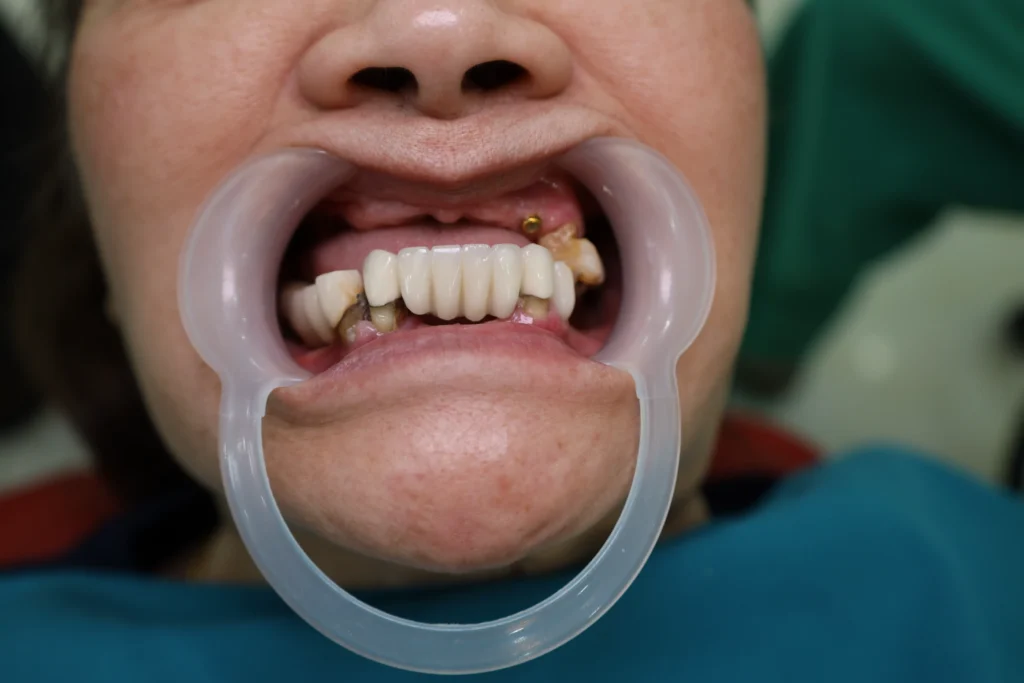
Compared with All-on-4, All-on-6 provides more anchor points, so chewing forces can be distributed across a greater portion of the arch. In selected cases, it may also involve less reliance on aggressive posterior angulation and allow shorter or reduced cantilever extensions at the back of the bridge.
The treatment can be used for patients who have lost most or all of their teeth, have severely failing teeth, or want a fixed alternative to removable dentures.
The additional implants do not automatically make All-on-6 appropriate for every patient. Six implant sites require sufficient bone volume and suitable anatomy across the arch, so a CBCT scan is an important part of treatment planning.
The final restoration may contain approximately 12-14 replacement teeth, depending on the patient’s anatomy and prosthetic design.
→ Unlike traditional removable dentures or conventional dental bridges, All-on-6 provides a fixed, non-removable solution supported by six implants..
How Much Does All-on-6 Cost in Vietnam?
All-on-6 dental implants in Vietnam commonly cost approximately $6,000-$15,500 USD per arch. The final price can vary significantly depending on implant brand, prosthesis material, bone condition, additional procedures, and the complexity of the case.
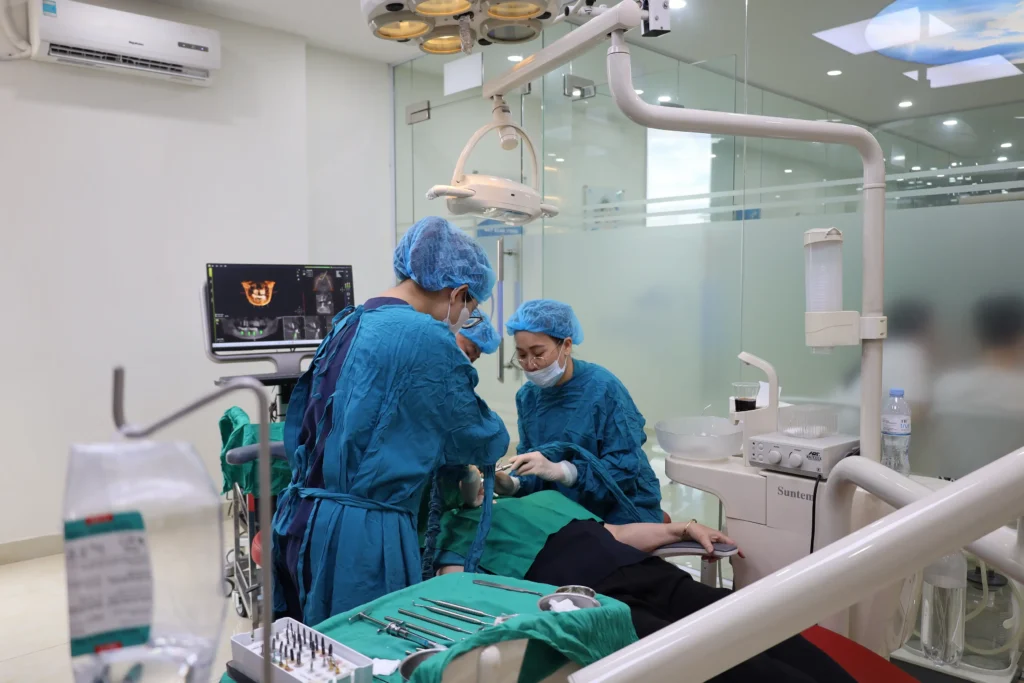
All-on-6 usually costs more than All-on-4 because it uses two additional implants and may require longer surgery and more restorative components. A difference of roughly 20-40% between comparable All-on-4 and All-on-6 treatment plans is a useful general market reference.
Typical All-on-6 Pricing by Implant Brand
The table below provides broad market-level estimates for international patients comparing implant systems in Vietnam. These figures are reference ranges rather than a fixed Hanoi Sydney Dental Clinic quotation.
| Implant Brand / Tier | Origin | Typical All-on-6 Price per Arch | Typical Positioning |
| Dentium | South Korea | $4,300–$7,100 / Warranty: 10 years | Value to mid-range |
| Dentium | USA | $5,200–$8,100 / Warranty: 15 years | Mid-range |
| Neodent | Brazil / Switzerland | $6,600–$9,300 / Warranty: Lifetime | Mid-to-premium |
| Mis C1 | Europe | $6,800–$9,200 / Warranty: 20 years | Premium |
| Straumann | Switzerland | $9,800–$12,600 / Warranty: Lifetime | Premium |
The implant fixture is only one part of the final price. Prosthetic material, laboratory work, abutments, imaging, temporary teeth, final bridge fabrication and additional surgical treatment can all affect the total cost.
Typical All-on-6 Cost Comparison
| Country | Typical All-on-6 Cost per Arch |
| United States | $25,000–$45,000 USD |
| Australia | $25,000–$45,000 AUD |
| New Zealand | $30,000–$50,000 NZD |
| Vietnam | Approximately $4,300–$12,600 USD |
Patients comparing All-on-6 dental implants in Hanoi should ask for an itemised treatment plan rather than comparing only the headline implant price.
A complete quotation should make clear whether the price includes six implants, provisional fixed teeth, the final bridge, implant components, imaging, and follow-up.
Extractions, bone grafting, sinus lift procedures, and other treatments may be billed separately, depending on the patient’s clinical condition.
→ For a complete overview of our current implant packages and full-arch pricing, please see our price list.
[Request a Personalised All-on-6 Quote]
All-on-4 or All-on-6: Which One Do You Actually Need?
The choice between All-on-4 and All-on-6 is one of the most important decisions for a full-arch implant patient. All-on-6 is not simply an upgraded version of All-on-4. The two protocols use different numbers of implants and suit different anatomical and functional situations.
| Your Situation | Possible Fit | Why |
| Limited bone toward the back of the jaw | All-on-4 | Angled posterior implants may make better use of available bone in suitable anatomy |
| Adequate, relatively uniform bone across the arch | All-on-6 | Six implant positions can distribute support across a wider area |
| Strong bite or frequent clenching/grinding | All-on-6 may be considered | Additional support points can help distribute chewing forces |
| Budget is an important consideration and bone conditions are suitable | All-on-4 may be considered | Uses two fewer implants and may have a lower treatment cost |
| Want a shorter posterior extension | All-on-6 may be considered | Six implants can allow a more distributed support design |
| Told that extensive bone grafting may be necessary | Either may be possible | CBCT planning can determine whether an alternative implant configuration changes the treatment plan |
The most important distinction is that All-on-4 can use a strategic implant configuration when posterior bone is limited, while All-on-6 generally requires adequate bone across more implant positions.
A patient with strong chewing forces or bruxism may benefit from discussing All-on-6, because six implants provide more points across which bite loads can be distributed. However, more implants do not automatically mean a better treatment outcome. Six implants also mean six surgical sites, a higher treatment cost, and the need for sufficient bone in more locations.
The final decision should be based on CBCT imaging, clinical examination, bite evaluation, oral health, and the patient’s long-term restorative goals, rather than a simple online comparison.
Not sure which option fits your case? Read our [All-on-4 dental implants in Vietnam] guide and compare both treatment approaches before making a decision.
[Get a Free All-on-6 Quote]
Why Six Implants? The Bone & Bite-Force Case for All-on-6
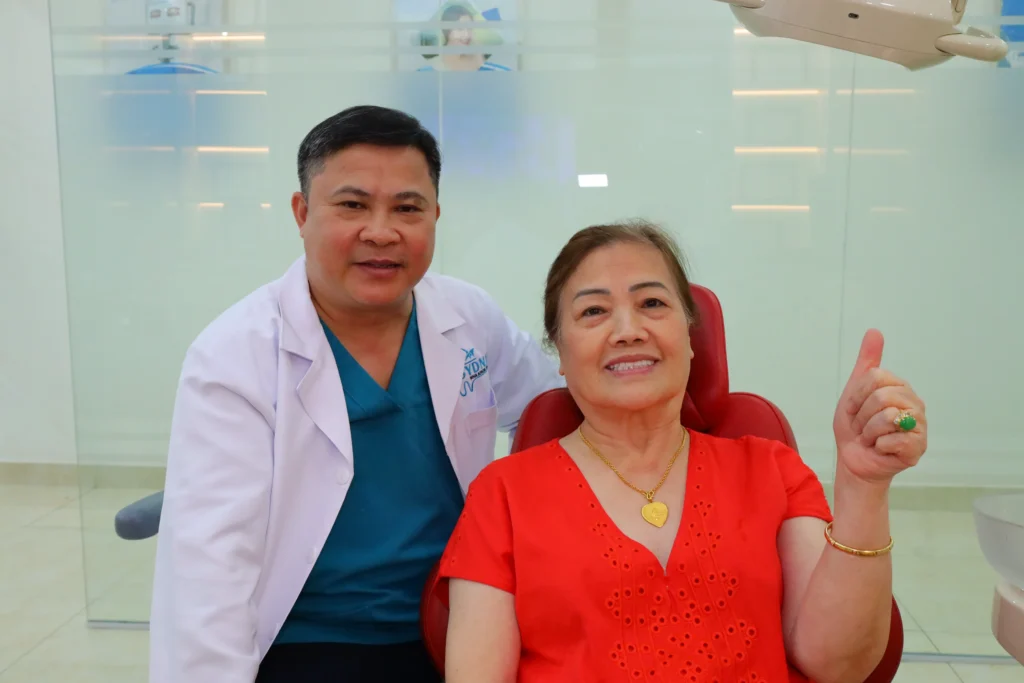
The main reason to consider All-on-6 is not simply the number six. The additional implant positions change how support is distributed across the full dental arch.
Bone Volume and Distribution
All-on-6 generally requires adequate bone at more implant positions than All-on-4. All-on-4 can use angled posterior implants to take advantage of available bone in selected areas, whereas All-on-6 often relies on bone that is distributed more evenly across the arch.
This does not mean every All-on-6 patient needs perfect bone volume. The actual requirement depends on implant size, implant position, jaw anatomy, and the design of the restoration. A CBCT scan provides the three-dimensional information needed to evaluate bone height, width, and anatomical structures before surgery.
For patients who have been told that bone loss limits their options, a CBCT-based second opinion may help clarify whether All-on-6, All-on-4, or another approach is appropriate.
Bite Force and Bruxism
Chewing forces are transferred through the prosthesis into the implants. Patients who clench their teeth, grind at night, or naturally generate high bite forces place greater mechanical demands on a full-arch restoration.
With six implants rather than four, the chewing load is spread across more support points. This is one reason All-on-6 may be considered for patients with bruxism or a strong bite, provided their bone anatomy is suitable.
The number of implants is not the only factor in durability. Occlusion, implant positioning, prosthetic design, material selection, maintenance, and patient habits all contribute to the long-term performance of a fixed full-arch restoration.
Built-In Redundancy
Six implant positions can also offer a degree of biomechanical redundancy compared with four. If one implant fails to integrate, the remaining implants may provide more support than an equivalent four-implant design would. However, implant failure is still a significant clinical problem, and the bridge cannot simply be left as it is without evaluation. A failed implant should be assessed by the treating dental team, and additional treatment or replacement may be required.
Redundancy is therefore a potential structural advantage, not a guarantee that implant failure will have no effect on the patient’s treatment.
Who Is a Good Candidate for All-on-6?
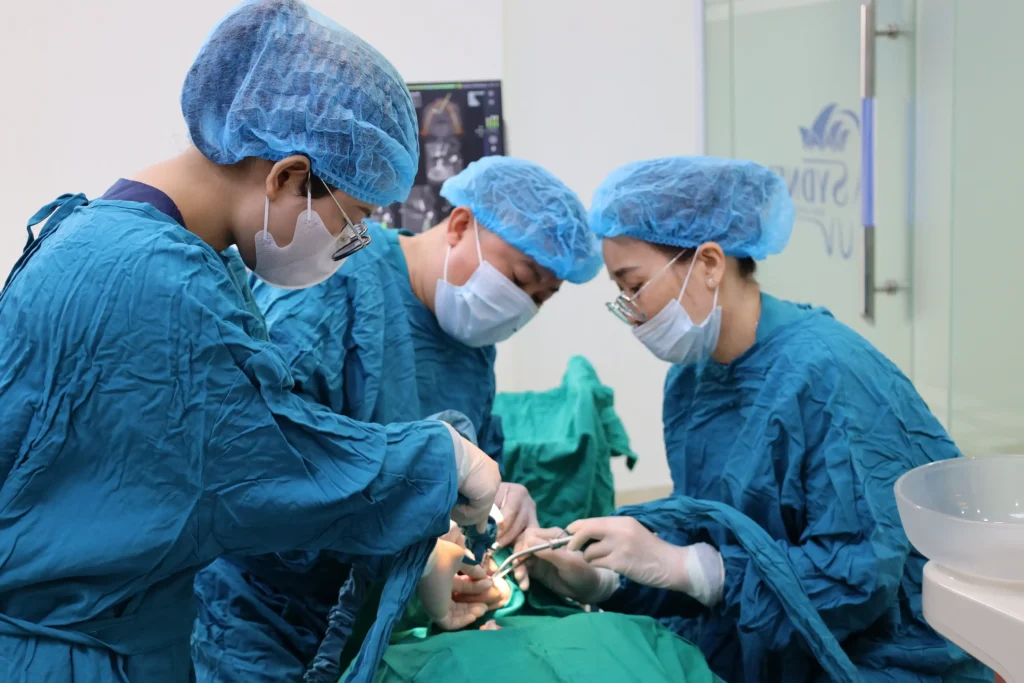
All-on-6 may be considered when a patient needs a fixed full-arch restoration and has suitable anatomy for six implants.
You may be a stronger fit for All-on-6 if:
- You have adequate and reasonably uniform bone volume across the arch.
- CBCT imaging shows suitable positions for six implants.
- You clench or grind your teeth.
- You have a naturally strong bite.
- You want more distributed implant support across the arch.
- You prefer a restoration with a shorter posterior extension where anatomy allows.
- You are missing most or all teeth and want a fixed full-arch solution.
All-on-6 may not be necessary or appropriate if:
- Posterior bone volume is significantly limited and has not been evaluated for other implant configurations.
- Bone grafting or sinus augmentation would be required to create suitable implant positions.
- Budget is a major constraint and four implants can adequately support the planned restoration.
- You have uncontrolled diabetes.
- You have active or untreated periodontal disease.
- Your medical or dental condition requires additional treatment before implant surgery.
All-on-6 suitability cannot be determined reliably from a photograph or online questionnaire. A CBCT scan and clinical assessment are required to evaluate implant positions and the overall treatment strategy.
→ You are missing only one or a few teeth — in this case, individual dental implants are usually the more appropriate solution.
The All-on-6 Procedure, Step by Step
All-on-6 follows the same broad treatment stages as other full-arch implant protocols, but placing six implants can make the surgery more extensive.
Step 1 — Consultation, CBCT Scan & Treatment Planning
Treatment begins with a clinical examination and three-dimensional CBCT imaging. The dental team assesses bone volume, anatomical structures, remaining teeth, gum health, and bite relationships. The six implant positions are then selected based on the patient’s anatomy and prosthetic requirements.
International patients may be able to send existing X-rays and dental records before travelling, but final treatment planning normally requires an in-person assessment.
Step 2 — Implant Surgery & Provisional Fixed Teeth
The six implants are placed according to the treatment plan. In a straightforward case, All-on-6 surgery can take about three hours per arch, although the actual duration depends on the patient’s anatomy and whether extractions or additional procedures are needed.
Where clinically appropriate, a provisional fixed bridge may be attached around the time of implant placement. It gives the patient fixed replacement teeth while the implants undergo osseointegration.
Step 3 — Osseointegration and Healing
Osseointegration is the process by which the implants integrate with the surrounding jawbone. Healing commonly takes several months, and 3–6 months is a useful general timeframe for many implant cases.
During this stage, patients normally need to follow specific dietary and hygiene instructions. Smoking can negatively affect healing, and uncontrolled diabetes can increase clinical concerns around implant treatment. Regular review appointments allow the dental team to monitor the implants and the provisional restoration.
Step 4 — Final Fixed Bridge
After sufficient healing, the final fixed prosthesis is completed. Depending on the treatment plan, it may be made from materials such as zirconia or acrylic with titanium reinforcement.
Digital impressions, bite records, and other clinical information may be used to design the final teeth. Before treatment is completed, the bridge is checked for fit, appearance, bite, and function.
Real Patient Cases — Before & After
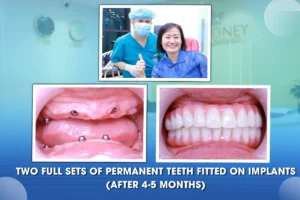
Real All-on-6 cases give patients useful evidence when they are considering full-arch treatment. Where patient consent is available, Hanoi Sydney Dental Clinic can present before-and-after cases showing the patient’s initial condition, implant configuration, and final restoration.
Useful case information includes:
- Upper or lower arch treated
- Number of implants
- Implant brand
- Prosthesis material
- Initial dental condition
- Number of visits
- Approximate treatment timeline
- Date of treatment
Before-and-after photography should show genuine patients rather than stock images. If the clinic has completed All-on-6 cases that can be shared publicly, these cases can help international patients understand how treatment may change both function and appearance.
Is All-on-6 Safe? Success Rates & Risks
All-on-6 is an established full-arch implant approach, but implant surgery always carries potential risks and complications. Published full-arch implant literature commonly reports long-term implant survival of approximately 94-98% at 10 years, although results vary between studies and patient populations. These figures describe outcomes reported in clinical research and are not a guarantee for an individual patient.
Possible complications include:
- Implant failure: an implant may not integrate successfully with the surrounding bone.
- Peri-implantitis: inflammation around the implants that can lead to bone loss if not properly controlled.
- Mechanical complications: the fixed prosthesis can wear, loosen, or fracture.
- Longer surgery: All-on-6 may take slightly longer than All-on-4 because two additional implants are placed.
- Sinus lift: in upper-jaw cases, this may sometimes be required when bone height in the posterior region is insufficient for the planned implants.
Factors That Influence Risk
Several factors can affect implant treatment outcomes, including bone quantity and quality, oral hygiene, existing gum disease, smoking, diabetes and its level of control, bite forces and bruxism, prosthetic design, and long-term maintenance.
Careful CBCT-based planning, appropriate implant placement, and regular maintenance are important parts of long-term implant care. Patients should discuss their complete medical and dental history with the treating clinician before surgery.
Meet Your Implant Specialist
Dr. Ha Ngoc Chieu, DDS, PhD
Hanoi Sydney Dental Clinic presents Dr. Ha Ngoc Chieu, DDS, PhD, as a dentist with more than 22 years of professional experience, with training associated with the United States, France, and South Korea. His areas of practice include dental implants, oral surgery, cosmetic dentistry, and preventive dentistry.
International patients considering All-on-6 can ask the clinic who will personally perform the implant surgery, who designs the prosthetic treatment, and how the treatment team is structured.
For a fuller professional profile, see the clinic’s [implant specialist information] or the more detailed doctor section on the All-on-4 treatment page.
→ Learn more about our team and clinic on the About Us page.
Aftercare: Living With Your All-on-6 Bridge
All-on-6 is a fixed restoration, but the implants and surrounding tissues still need regular maintenance. Patients should clean carefully around the bridge using appropriate brushes and interdental cleaning aids. A water flosser may also be recommended, depending on the design of the restoration.
Professional maintenance is commonly scheduled about every six months, although the exact interval depends on the patient’s oral health and risk factors. An annual dental and radiographic evaluation may also help monitor implant stability and the surrounding bone.
With six implants and a well-designed bridge, some restorations have shorter posterior extensions than comparable four-implant designs, which may make hygiene easier in certain cases. Long-term success still depends on daily cleaning, professional maintenance, bite management, and healthy habits.
What Happens After You Fly Home?
International patients should understand the aftercare process before starting treatment in Vietnam. Before returning home, ask for copies of important treatment information, such as:
- Implant brand and model
- Implant identification or serial information
- Treatment records
- CBCT or radiographic files
- Prosthetic details
- Aftercare instructions
- Recommended follow-up schedule
Patients should also know how to contact the clinic if a concern arises after they return home. The clinic’s international-patient coordinator can explain the available communication channels and the process for arranging follow-up.
The warranty policy should also be reviewed carefully, including what happens if an implant fails, a prosthetic component needs repair, or another clinical issue develops. For patients travelling internationally, understanding post-treatment support is as important as understanding the initial treatment price.
Planning Your Trip: All-on-6 in Hanoi for International Patients
Hanoi Sydney Dental Clinic is located at No. 92 Nguyen Chanh, Yen Hoa, Cau Giay, Hanoi. Where the clinical situation and treatment plan allow, international patients can plan their treatment around two main visits.
Trip 1
The first visit may include:
- Initial consultation
- CBCT scan
- Implant treatment planning
- Implant surgery
- Provisional fixed bridge
- Initial follow-up
A stay of about 7-10 days may be suitable for some patients, depending on the treatment schedule. After the first visit, the patient returns home during the healing and osseointegration period.
Healing Period
The healing period commonly lasts about 3-6 months. During this time, patients should follow the clinic’s instructions for diet, hygiene, medication, and follow-up.
Trip 2
The second visit may involve:
- Final impressions or digital records
- Final bridge fabrication and fitting
- Bite adjustment
- Final treatment review
A stay of about 5-7 days may be sufficient for some cases, although the required duration varies. Patients should confirm their individual schedule with the clinic before booking flights.
Why Hanoi?
Hanoi offers international visitors access to a major airport, hotels, restaurants, and a wide range of services. Between appointments, and subject to their recovery instructions, patients may also explore the city, including Hoan Kiem Lake and the Old Quarter.
Noi Bai International Airport is commonly about 25-30 minutes from the clinic by car in favourable traffic, although the actual journey can take longer.
Patients from Australia and New Zealand should also factor in flights, accommodation, local transport, and the cost of a possible second trip when calculating the overall cost of dental tourism.
Visa and entry requirements should always be checked against current official Vietnamese immigration information before travel.
Frequently Asked Questions
What is All-on-6?
All-on-6 is a full-arch dental implant technique that uses six dental implants to support one fixed bridge in a single jaw. The six implants provide additional support points compared with All-on-4 and can distribute chewing forces across a wider area when the patient’s anatomy is suitable.
How much does All-on-6 cost in Vietnam or Hanoi?
All-on-6 dental implants in Vietnam commonly cost approximately $6,000–$15,500 USD per arch. The final price depends on implant brand, prosthesis material, bone condition, additional procedures and the treatment plan selected.
What’s the difference between All-on-4 and All-on-6?
All-on-4 uses four implants per arch, while All-on-6 uses six. All-on-6 can distribute chewing forces across more implant positions and may provide shorter posterior extensions in some designs, while All-on-4 can be useful when posterior bone is limited. CBCT imaging is needed to determine which configuration suits the patient’s anatomy.
Is All-on-6 better than All-on-4?
All-on-6 is not universally better than All-on-4. Six implants may be useful for patients who have adequate bone across the arch, higher bite forces or bruxism, while All-on-4 may be appropriate when implant placement needs to make strategic use of available bone. The choice should be based on clinical findings rather than implant count alone.
How much bone do I need for All-on-6?
There is no single bone-volume measurement that applies to every All-on-6 patient. Six implant positions require suitable bone volume, width and anatomy across the intended implant sites. CBCT imaging is used to evaluate the available bone and determine whether All-on-6, All-on-4, bone grafting or another approach is appropriate.
Will I get teeth on the same day as surgery?
Some suitable All-on-6 patients can receive a provisional fixed bridge around the time of implant surgery. Same-day or immediate provisional teeth refer to the temporary restoration rather than the final permanent bridge. The final bridge is normally fitted after the implants have had sufficient time to heal and integrate.
How long does All-on-6 treatment take from start to finish?
The full All-on-6 treatment commonly includes consultation, CBCT planning, implant surgery, provisional teeth, a healing period and final bridge fitting. A healing period of approximately 3–6 months is common, but the overall treatment timeline depends on bone healing, surgical complexity and prosthetic requirements.
Is All-on-6 more painful or a longer recovery than All-on-4?
All-on-6 involves two additional implant positions and can therefore involve a somewhat longer surgical procedure than All-on-4. Post-operative swelling and discomfort vary from patient to patient. Recovery depends on the surgical procedure, any extractions or grafting and the individual’s healing response.
How long do All-on-6 implants last?
All-on-6 implants can remain functional for many years with appropriate treatment planning, oral hygiene and maintenance. Long-term full-arch implant research commonly reports approximately 94–98% implant survival at 10 years in published evidence ranges, although individual outcomes vary.
What happens if one of the six implants fails?
An implant that fails to integrate or later becomes compromised must be clinically evaluated. Because All-on-6 uses six support points, the remaining implants may provide greater biomechanical support than a comparable four-implant arrangement, but failure can still require treatment, replacement or changes to the restoration.
Get Your Free All-on-6 Quote
Considering All-on-6 dental implants in Vietnam?
Hanoi Sydney Dental Clinic can review your current dental situation and discuss whether a six-implant full-arch restoration may be appropriate. International patients can send recent panoramic X-rays, CBCT scans, dental photographs, or information about their current dentures and missing or failing teeth.
A personalised consultation can then assess bone volume, implant positioning, bite forces, and prosthetic requirements.
Ask for a written treatment plan that explains:
- Proposed implant system
- Number of implants
- Provisional and final prosthesis
- Included services
- Possible additional procedures
- Expected treatment timeline
- Follow-up arrangements
The first step is simply to understand which full-arch treatment fits your mouth: All-on-4, All-on-6, or another solution.
[Get Your Free All-on-6 Quote]
Contact Information
» Company name: HANOI SYDNEY DENTAL JOINT STOCK COMPANY
» Address: No 92, Nguyen Chanh, Yen Hoa Ward, Hanoi city, Vietnam
» Please contact me via WhatsApp: +84398348888
» Website: https://nhakhoahanoisydney.vn
» Email: nhakhoahanoisydney@gmail.com